
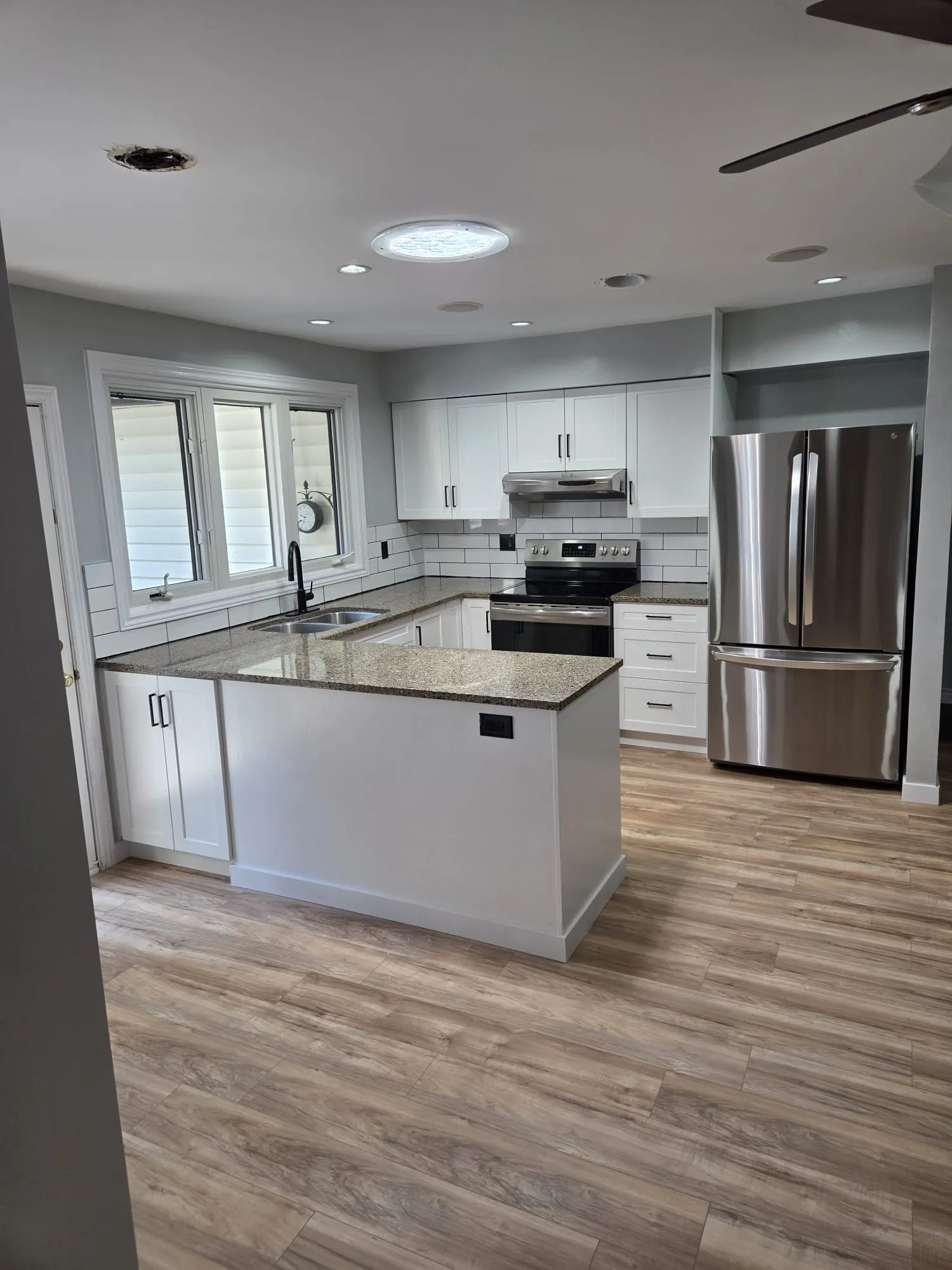
Two kitchens the same size can cost very different amounts
Square footage matters less than most people expect. What moves the number is how much changes: whether plumbing and electrical move, what cabinets you pick, and what the countertop is made of.
Here are the factors we look at when we put together a quote, roughly in order of how much they affect the total.
1. Keeping or changing the layout
Keeping the sink, range and fridge where they are is the single biggest way to control cost. Moving a sink means moving drain and supply lines; moving a range can mean new electrical or gas. Adding a peninsula or island with a sink or outlets adds more.
A same-footprint renovation with new cabinets, counters, backsplash and floor still makes the room look completely different.
2. Cabinets
Cabinets are usually the largest line item. Stock, semi-custom and custom cabinets differ in price, lead time and how precisely they fill the space. Full-height pantry units and extras like pull-outs add up quickly.
3. Countertops
Laminate, quartz and natural stone sit at very different price points. Stone and quartz are templated after the cabinets are installed, which also affects the schedule — that's often the longest wait in a kitchen project.
4. Backsplash, flooring and finishing
Subway tile is quick and cost-effective; patterned or natural-stone tile takes more labour. If the old cabinets come out, the floor underneath usually needs attention too, so many kitchen projects include new flooring. Paint and trim finish the room.
5. What's behind the walls
Older London homes sometimes reveal surprises once the old kitchen comes out — outdated wiring, old plumbing, or water damage under the sink. A good quote explains how these are handled if they come up.
Getting an accurate number
The only way to get a real price is to have someone look at the space. We'll visit, talk through what you want, and give you a written quote that spells out what's included.